FTAC undergoes changes AF wide
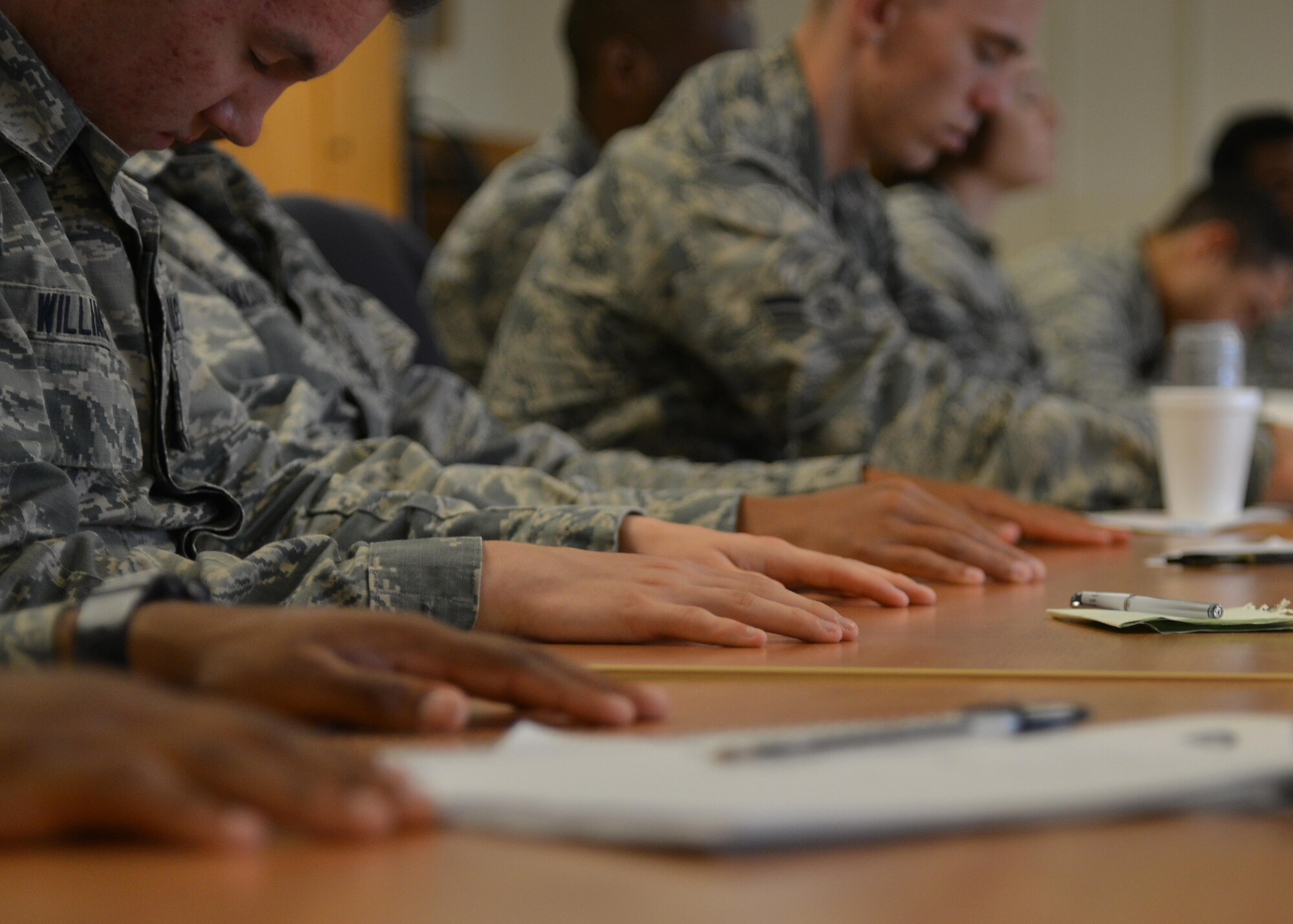
U.S. Air Force Staff Sgt. Codi Walach, First Term Airman Course team lead, supervises a team building exercise at Joint Base Langley-Eustis, Va., July 21, 2017. The U.S. Air Force made changes to the First Term Airman Course in late May, changing its focus from in-processing to being mission ready.
FTAC undergoes changes AF wide
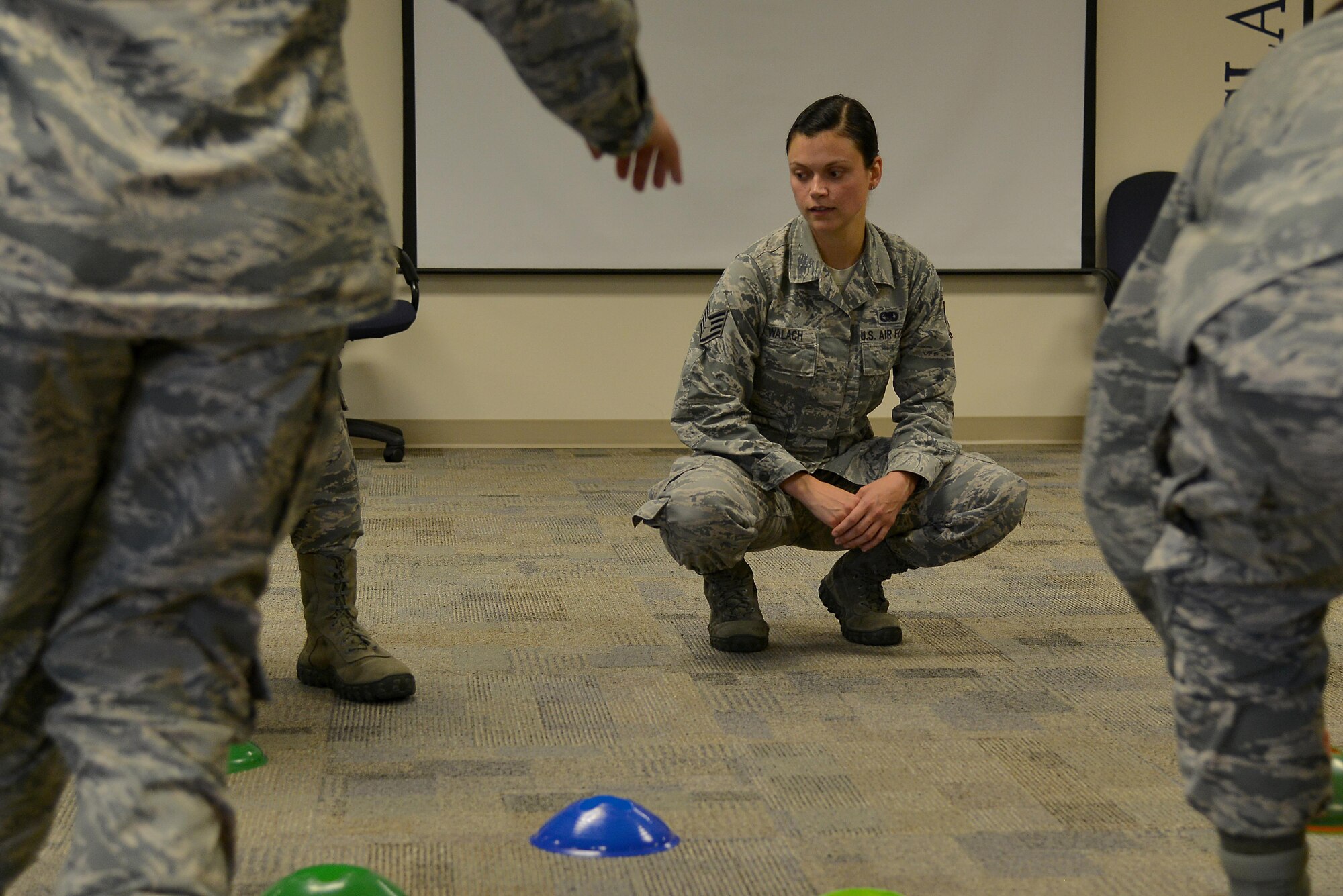
U.S. Air Force Airmen taking the First Term Airman Course prepare to start an obstacle course during physical training at Joint Base Langley-Eustis, Va., July 19, 2017. The new FTAC will involve more team physical training to help Airmen with their team-building skills.
FTAC undergoes changes AF wide
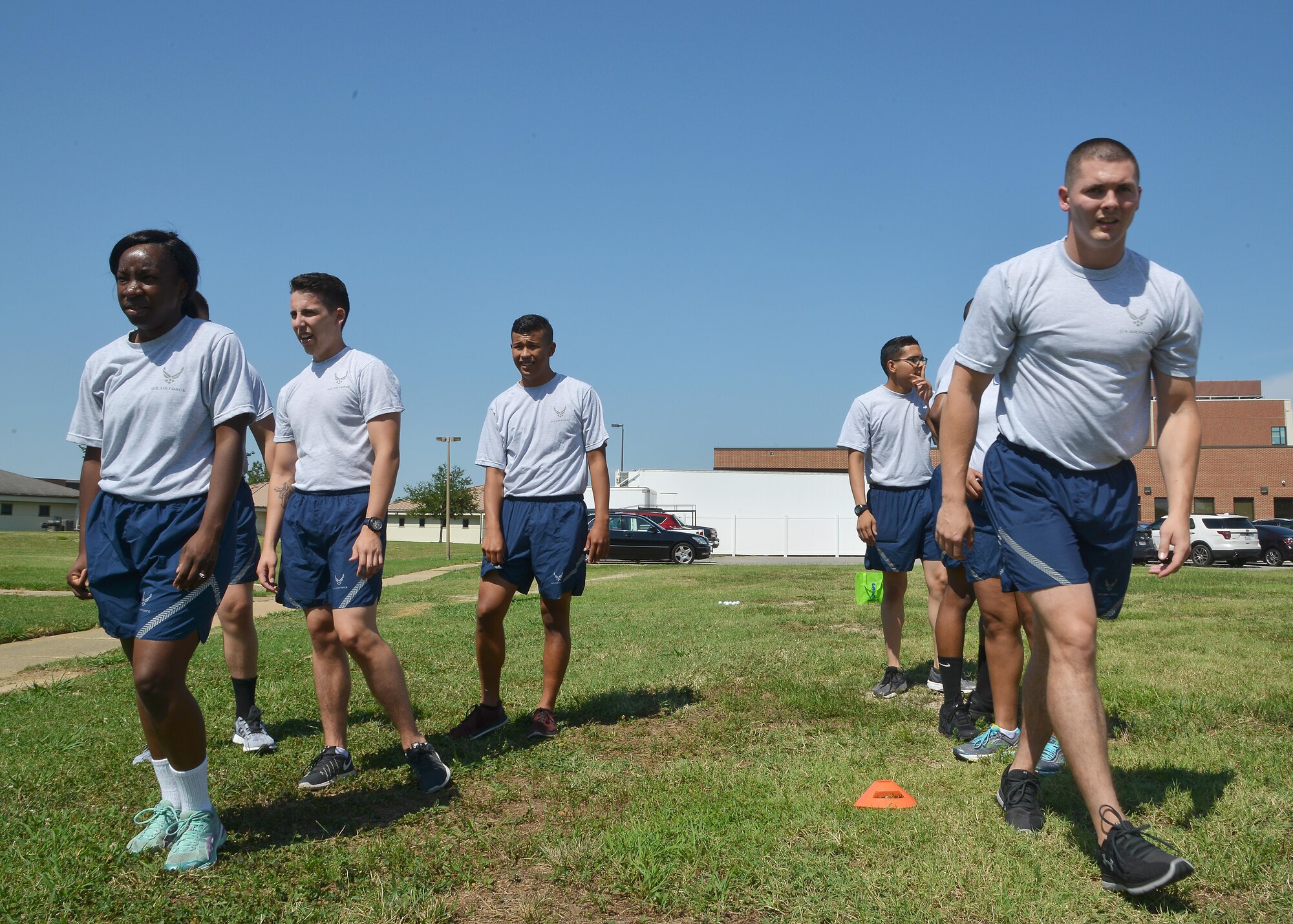
U.S. Air Force Senior Master Sgt. Ellwood Tegtmeier, 633rd Medical Group superintendent, speaks to Airmen about the importance of being resilient during the First Term Airman Course at Joint Base Langley-Eustis, Va., July 20, 2017. Resiliency training is the biggest block during FTAC and covers eight skill sets that prepare Airmen for any life stressors such as deployments, family separations and working late hours.
FTAC undergoes changes AF wide
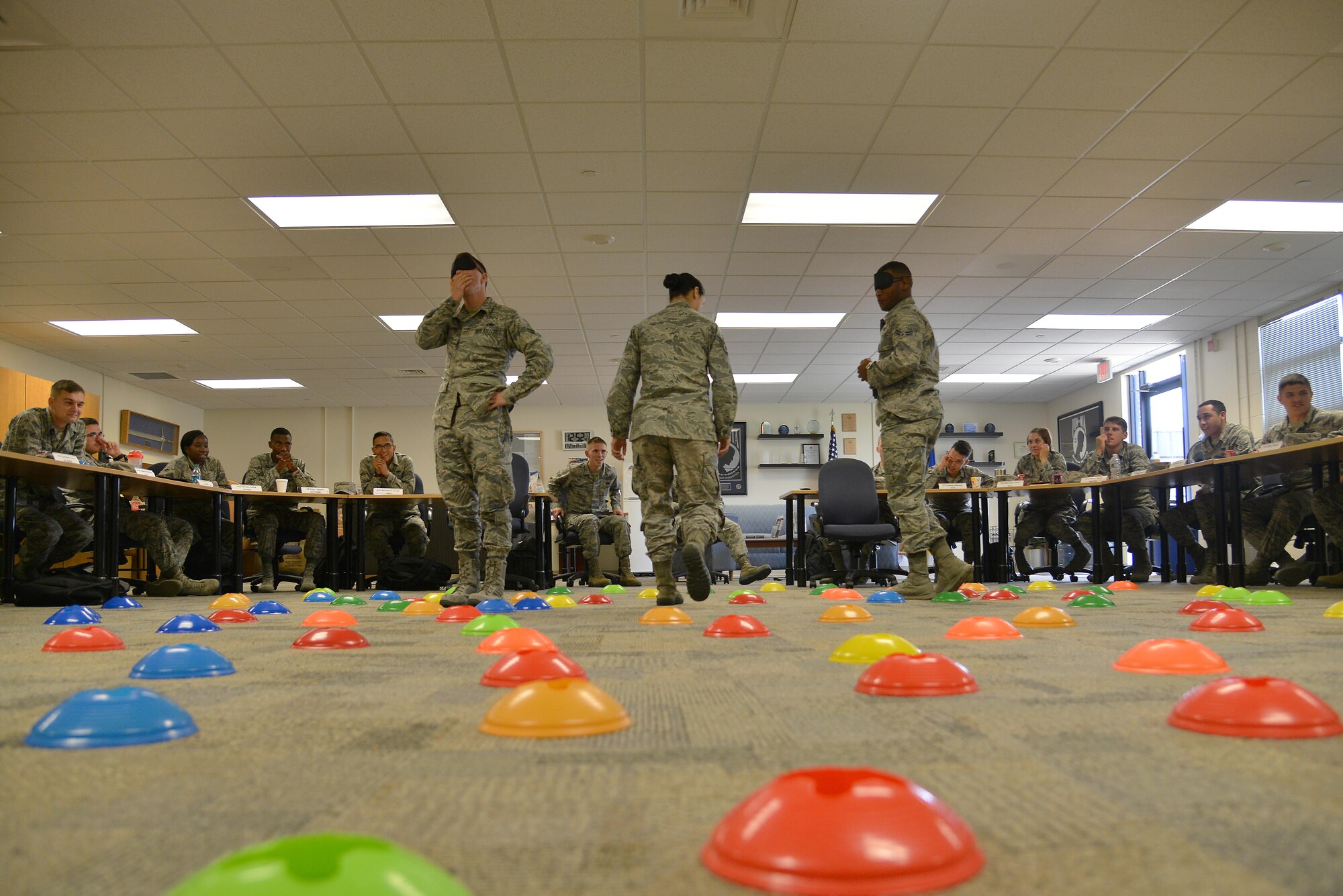
U.S. Air Force Airmen enrolled in the First Term Airman Course participate in a mine field exercise at Joint Base Langley-Eustis, Va., July 21, 2017. During the team-building exercise, the students worked together to navigate across the classroom in a simulated mine field.
FTAC undergoes changes AF wide
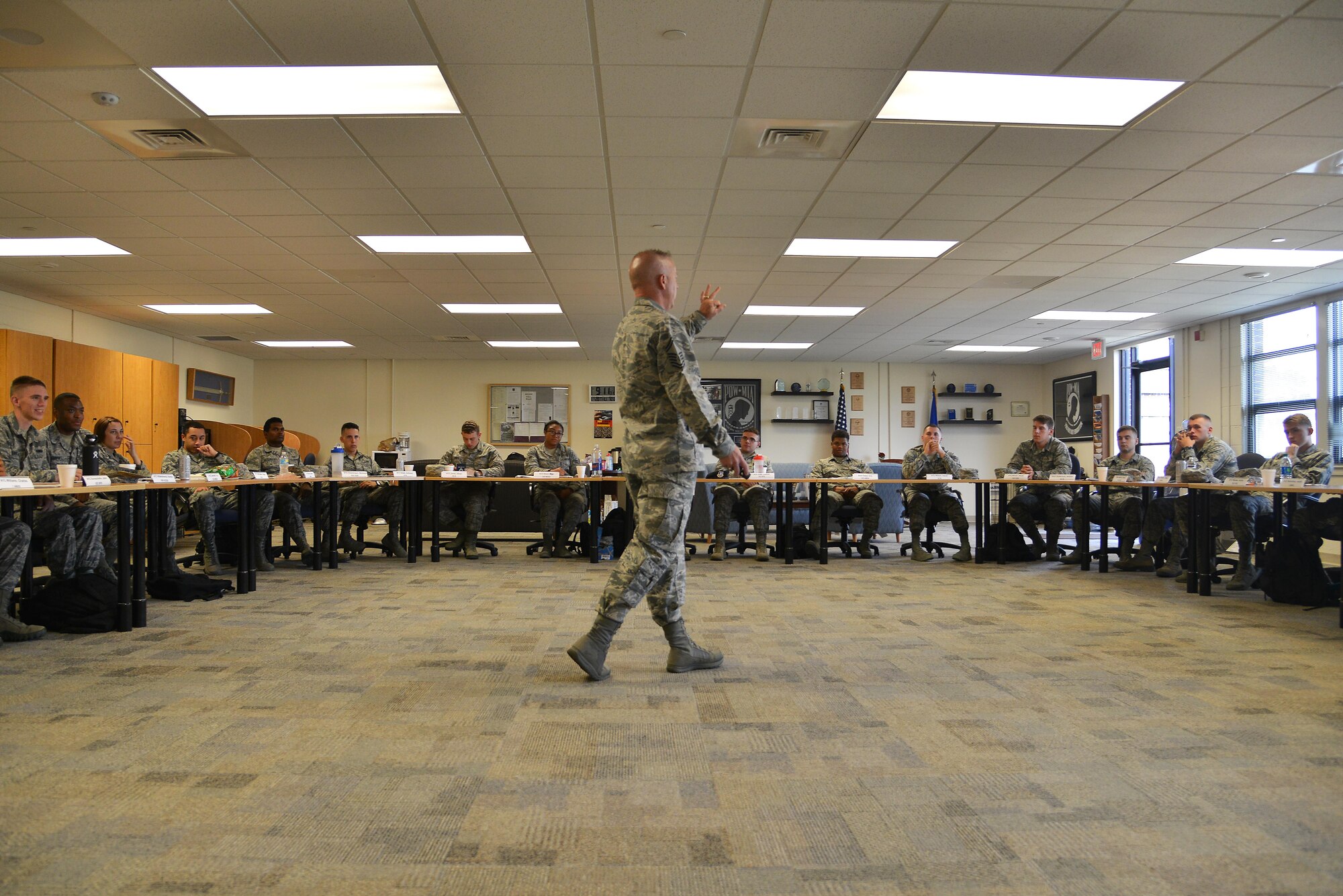
U.S. Air Force Airmen enrolled in the First Term Airman Course practice meditation, as a resiliency skill, to combat stress at Joint Base Langley-Eustis, Va. July 20, 2017. The course has new objectives such as enhancing human capital, personal financial management, resiliency training, team building exercises, physical training, and “What Now, Airman?” scenarios to develop Airman professionally to support warfighters.
By Airman Alexandra Naranjo / Published July 26, 2017
JOINT BASE LANGLEY-EUSTIS, Va. ,
The U.S. Air Force made
changes to the First Term Airman Course in late May, changing its focus from in-processing
to being mission ready.
According to Senior Master
Sgt. Michael Lee, Joint Base Langley-Eustis career assistance advisor, the old
course material overtime began to focus mainly on in-processing. The new week
long course; however, will steer away from in-processing and focus on
developing every Airman professionally to support warfighters.
The course has new
objectives such as enhancing human capital, personal financial management,
resiliency training, team building exercises and “What Now, Airman?” scenarios.
The “What Now, Airman?” scenarios are scenarios that are given to the Airmen to
see how they would react or what they would do in certain predicaments such as
alcohol related incidents or sexual harassment in the work space.
“I feel like the Airmen
will benefit from the new changes,” said Staff Sgt. Codi Walach, JBLE FTAC team
lead. “It will greatly enhance them to get them where they need to be in the
future.”
Resiliency training is one
of the most important blocks during FTAC, and covers eight skill sets that
prepare Airmen for life stressors, such as deployments, family separations and
working late hours.
“Resiliency is one of
the most important blocks because resiliency helps the Air Force community be
more flexible to meet any challenge today and tomorrow,” said Walach.
According to Lee, the
new changes to the FTAC curriculum are Air Force-wide and are intended to
create more leaders earlier on in their careers.
“I feel the Air Force
absolutely got this right with the FTAC transformation,” said Lee. “The Air
Force will no longer wait until Airman Leadership School to develop our Airmen
into NCOs. They will start at the beginning by giving them the right tools to
become effective Airmen.”